
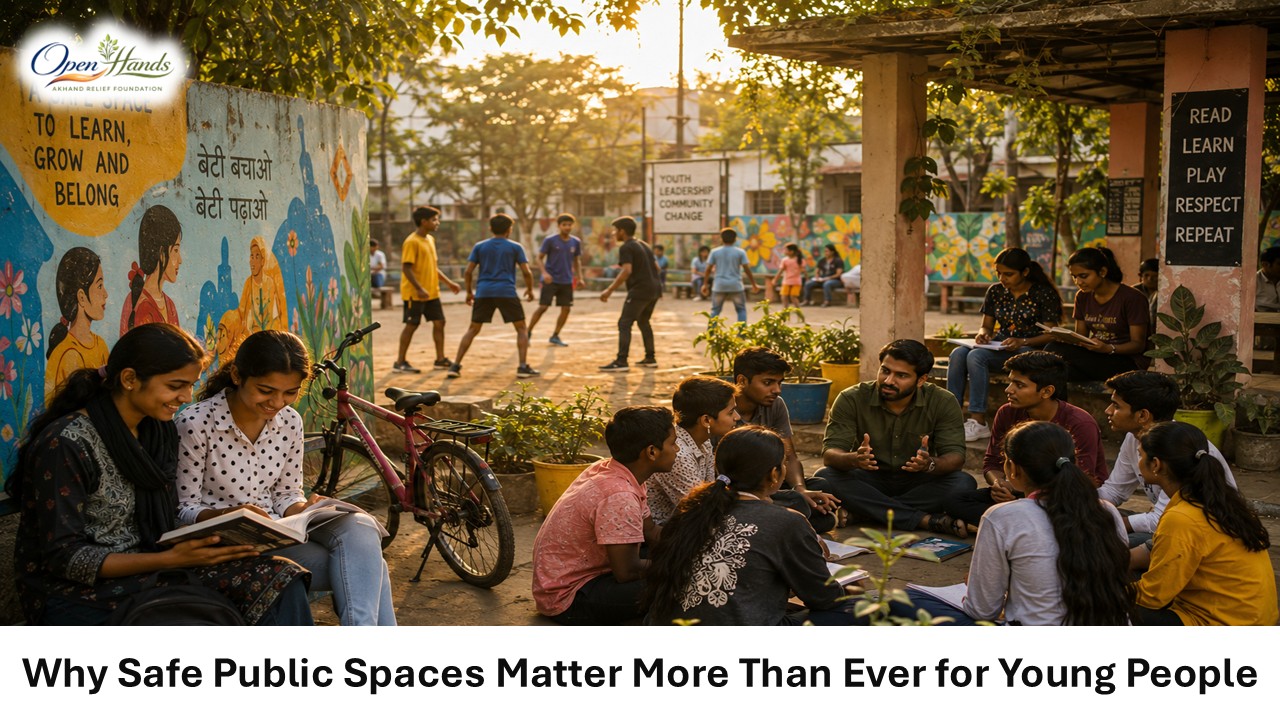
WHY SAFE PUBLIC SPACES MATTER MORE THAN EVER FOR YOUNG PEOPLE
A generation can lose confidence long before it loses opportunity.
Sometimes the problem is not lack of talent, ambition, or intelligence. Sometimes the problem is the absence of safe spaces where young people can simply exist, interact, learn, and grow without fear, pressure, or exclusion.
Across many communities, especially in rapidly growing urban and semi-urban areas, safe public spaces for youth are quietly disappearing.
Parks become inaccessible. Libraries remain underfunded. Community centers are limited. Recreational spaces shrink. Streets feel unsafe. Social interaction increasingly moves online.
The consequences go far beyond leisure.
Safe public spaces influence:
- Mental health
- Educational engagement
- Social confidence
- Creativity
- Community participation
- Physical wellbeing
- Emotional resilience
In the next decade, communities that invest in youth-centered public environments may build stronger social stability than those focused only on physical infrastructure.
Public Spaces Shape Human Development
Young people do not grow only inside classrooms.
They also develop through:
- Observation
- Conversation
- Exploration
- Group interaction
- Informal learning
- Community participation
Safe public spaces create environments where these experiences happen naturally.
A local library may encourage curiosity. A sports ground may build teamwork. A community center may reduce loneliness. A reading space may strengthen focus. Even a safe neighborhood gathering area can create belonging.
Without these environments, many young people experience increasing isolation.
Digital Connection Cannot Fully Replace Physical Community
Technology has created extraordinary opportunities for learning and communication. But excessive digital dependence has also changed how young people interact socially.
Many now spend:
- Less time outdoors
- Less time in community activities
- Less time engaging face-to-face
- More time consuming passive content
- More time navigating social comparison online
As digital life expands, physical community spaces become even more important.
Young people still need:
- Real-world social interaction
- Mentorship
- Shared experiences
- Emotional support systems
- Safe environments for expression
Healthy communities require both digital access and human connection.
The Mental Health Impact
One of the most overlooked benefits of safe public spaces is their effect on emotional wellbeing.
Isolation, anxiety, stress, and social disconnection are rising concerns among youth globally. Public spaces can help counter these pressures by creating opportunities for:
- Social bonding
- Recreation
- Creative expression
- Physical movement
- Peer support
- Reduced emotional isolation
Importantly, safe environments help young people feel visible and valued within society.
A community that creates space for its youth communicates something powerful:
“You belong here.”
Inequality Often Determines Who Has Space
Access to safe public environments is not equally distributed.
In many underserved communities:
- Parks are poorly maintained
- Girls face mobility restrictions
- Recreational infrastructure is limited
- Libraries and learning centers are absent
- Public safety concerns reduce participation
As a result, many young people spend most of their time either indoors or online.
This creates deeper inequality over time because spaces influence exposure, confidence, and opportunity.
Communities with strong public infrastructure often produce:
- Higher civic participation
- Better youth engagement
- Stronger educational outcomes
- Healthier social relationships
Space itself becomes a developmental advantage.
Why Youth Spaces Are Economic Infrastructure Too
Safe community spaces are often viewed as optional social amenities. In reality, they are long-term economic infrastructure.
Youth who feel supported socially are more likely to:
- Stay engaged in education
- Build communication skills
- Develop leadership ability
- Participate in community initiatives
- Avoid harmful behaviors
- Build stronger professional confidence
Investing in safe spaces today can reduce future social costs linked to:
- Crime
- Addiction
- School dropout
- Mental health crises
- Social instability
Strong communities are built through environments that support human development early.
Building Better Community Spaces
Creating safe public environments does not always require expensive infrastructure.
Even small initiatives can create meaningful impact:
- Community reading rooms
- Youth learning centers
- Local sports activities
- Public discussion spaces
- Girls’ safe mobility programs
- Art and creativity workshops
- Open community libraries
- Weekend educational gatherings
The most effective spaces are often:
- Accessible
- Inclusive
- Consistent
- Community-led
- Locally trusted
Infrastructure becomes powerful when people feel emotionally safe using it.
The Role of Grassroots Organizations
Grassroots organizations often understand community realities more closely than centralized systems.
They can:
- Identify local youth challenges
- Build trusted environments
- Encourage participation
- Create inclusive programming
- Connect education with community wellbeing
Youth development is not only about academic performance. It is about creating environments where individuals feel capable of imagining a future for themselves.
That process begins with access, trust, and belonging.
Conclusion
The future of communities will not depend only on roads, technology, or economic growth. It will also depend on whether young people have safe places to gather, learn, interact, and grow with dignity.
Public spaces shape emotional health, confidence, opportunity, and social cohesion in ways that are often invisible until they disappear.
Communities that invest in youth-centered environments are not simply creating recreational areas. They are building stronger social foundations for the future.
Organizations like OpenHands Akhand Relief Foundation continue recognizing that sustainable development requires more than services alone. It requires creating safe, human-centered ecosystems where young people can learn, participate, and thrive together over the long term.