
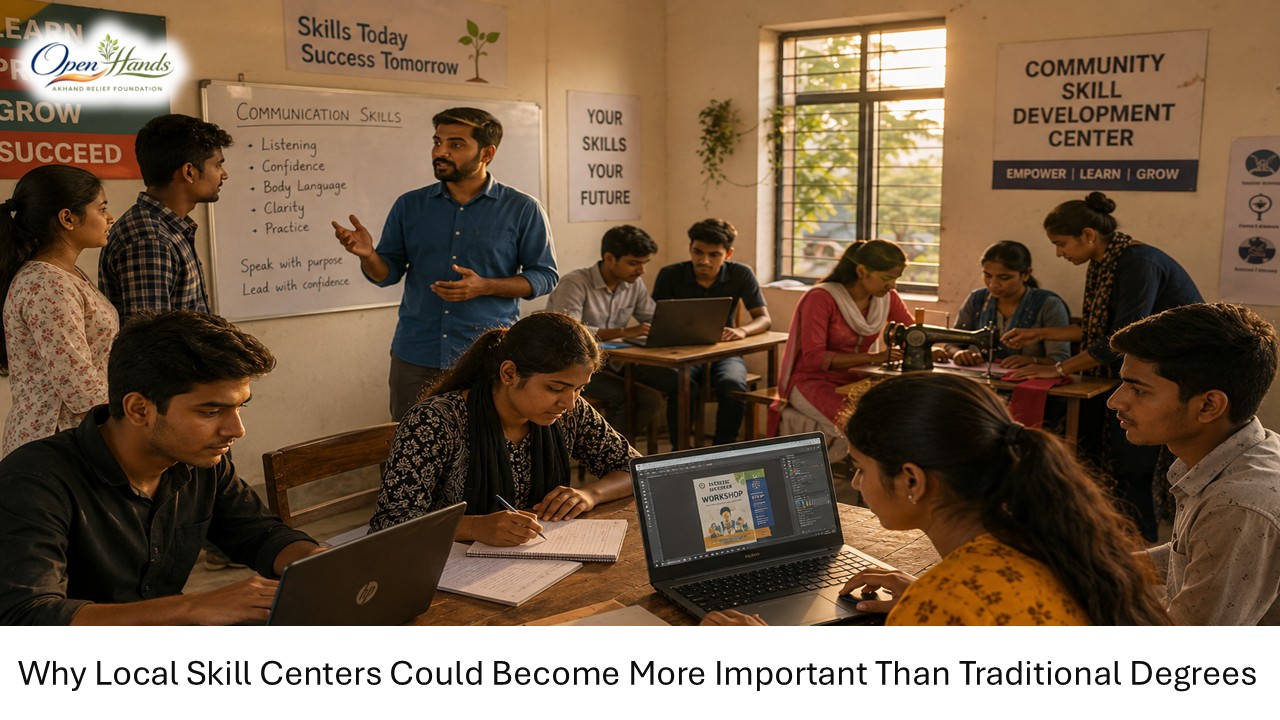
WHY LOCAL SKILL CENTERS COULD BECOME MORE IMPORTANT THAN TRADITIONAL DEGREES
The future job market is changing faster than many education systems can adapt.
Degrees still matter. But increasingly, employers are also looking for:
- Practical skills
- Adaptability
- Communication ability
- Digital confidence
- Problem-solving capacity
- Real-world experience
This shift is creating a major opportunity for local skill centers and community-based learning programs.
In many communities, especially across developing regions, traditional education alone is no longer enough to guarantee economic stability. Young people often complete formal education yet still struggle to find meaningful employment because their skills do not match rapidly evolving market demands.
That gap is becoming one of the defining workforce challenges of the next decade.
The Employment Landscape Is Changing
Technology, automation, AI systems, and digital platforms are transforming industries at extraordinary speed.
Jobs are evolving in sectors such as:
- Retail
- Healthcare
- Customer service
- Manufacturing
- Education
- Logistics
- Design
- Agriculture
- Administration
Many roles now require hybrid capabilities:
- Technical understanding
- Communication skills
- Digital literacy
- Continuous learning ability
Traditional academic systems often move slowly compared to industry changes. As a result, many students graduate without practical exposure to current tools, workflows, or workplace expectations.
Local skill centers can respond faster because they are often:
- Flexible
- Community-driven
- Industry-focused
- Practical in approach
- More accessible financially
Skill Development Is Becoming Economic Infrastructure
Communities that invest in practical learning systems may become more economically resilient in the future.
Skill development affects:
- Employment access
- Entrepreneurship
- Income stability
- Youth confidence
- Local business growth
- Economic mobility
In underserved areas, local skill centers can provide opportunities that formal institutions may not easily reach.
This includes training in:
- Digital skills
- Spoken communication
- AI awareness
- Financial literacy
- Vocational trades
- Healthcare assistance
- Design and media
- Online work platforms
- Small business operations
The goal is not only employment. It is long-term adaptability.
Why Community-Based Learning Works
People learn best when education feels relevant to real life.
Community-based skill programs often succeed because they:
- Operate closer to local realities
- Understand regional employment challenges
- Offer practical application
- Build confidence gradually
- Create peer support systems
- Reduce educational intimidation
For many young people, especially first-generation learners, local learning environments feel more approachable than large institutional systems.
This accessibility matters.
Education becomes more effective when students believe participation is possible.
Degrees Alone Are No Longer Enough
Many employers today prioritize:
- Demonstrated capability
- Portfolio work
- Problem-solving ability
- Communication skills
- Initiative
- Digital competence
This does not mean degrees have lost value. It means education is becoming broader than certification alone.
Young people increasingly need:
- Lifelong learning habits
- Multi-skill adaptability
- Continuous upskilling
- Practical exposure
The future workforce may reward those who can learn quickly rather than those who only hold static qualifications.
Rural and Semi-Urban Areas Need New Learning Models
One major challenge is that opportunities remain unevenly distributed.
Urban populations often have:
- Better coaching access
- More digital exposure
- Stronger networking ecosystems
- Greater internship availability
Meanwhile, rural and semi-urban youth frequently face:
- Limited training infrastructure
- Reduced career guidance
- Poor digital access
- Fewer mentorship opportunities
Local skill centers can help bridge this divide by decentralizing opportunity.
When practical learning becomes locally available, communities become less dependent on migration alone for economic growth.
Skill Development Also Builds Confidence
One overlooked impact of practical learning is psychological.
Young people who gain employable skills often experience:
- Increased self-belief
- Greater independence
- Higher motivation
- Improved communication
- Reduced social anxiety
Communities become stronger when individuals feel capable of contributing meaningfully.
Skill development therefore supports both economic and social resilience.
The Importance of Human Skills in the AI Era
As AI automates repetitive tasks, human-centered skills may become even more valuable.
Future-ready education should include:
- Critical thinking
- Ethical reasoning
- Team collaboration
- Leadership
- Creativity
- Emotional intelligence
Technology changes rapidly. Human adaptability remains essential.
The strongest skill systems will combine:
- Technical training
- Digital literacy
- Human capability development
Building Sustainable Learning Ecosystems
Effective community skill ecosystems require:
- Local partnerships
- Affordable access
- Consistent mentorship
- Industry relevance
- Community trust
- Long-term engagement
Short-term training alone is not enough.
Communities need systems that continuously support learning, guidance, and adaptation over time.
Grassroots organizations can play an important role by creating learning environments that are practical, inclusive, and connected to real-world opportunity.
Conclusion
The future economy may not belong exclusively to those with the highest degrees. It may increasingly favor those who can adapt, learn continuously, and apply practical skills in changing environments.
Local skill centers are becoming more than educational support systems. They are emerging as community infrastructure for economic resilience, youth empowerment, and social mobility.
As industries continue evolving, communities that invest in accessible, practical, and human-centered learning systems may build stronger long-term stability.
Organizations like OpenHands Akhand Relief Foundation continue recognizing that sustainable development depends not only on access to education, but on creating pathways that help individuals convert learning into confidence, capability, and opportunity.