
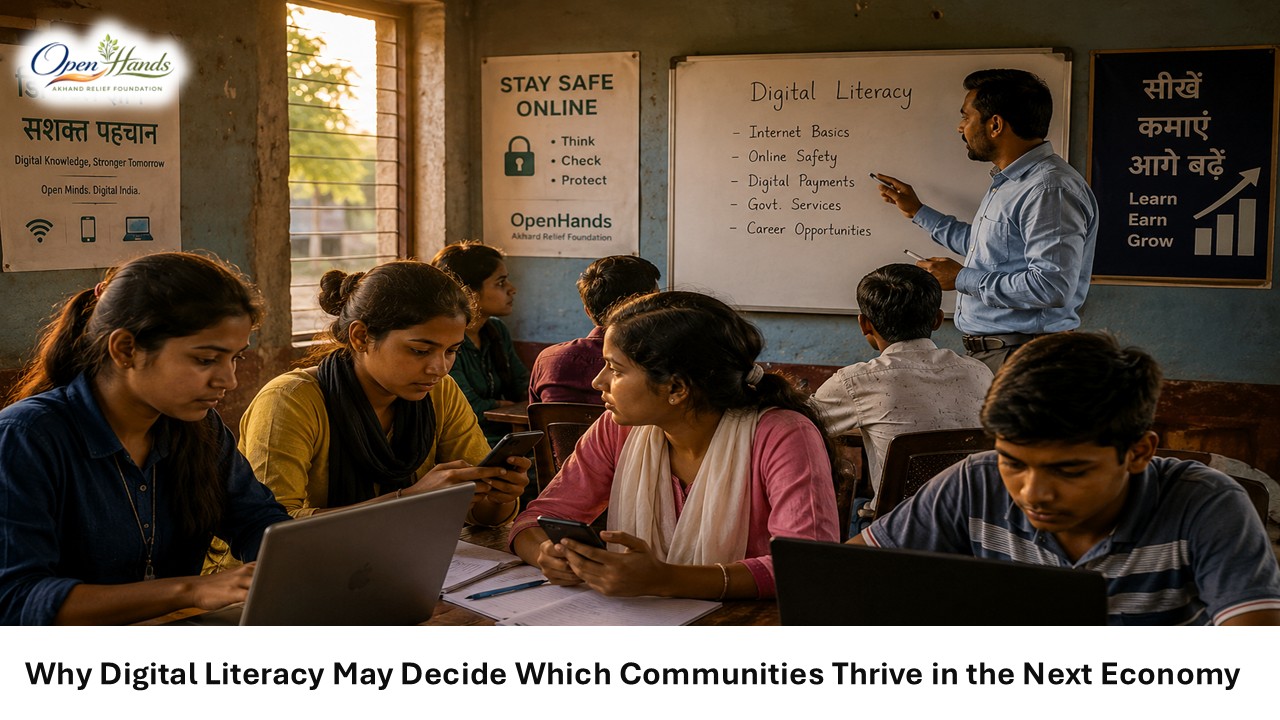
WHY DIGITAL LITERACY MAY DECIDE WHICH COMMUNITIES THRIVE IN THE NEXT ECONOMY
The future economy will not only reward people who have internet access. It will reward people who know how to use technology intelligently, safely, and independently.
That distinction matters more than ever.
Across the world, millions of people now have smartphones and internet connectivity. Yet many still struggle with digital literacy — the ability to understand, evaluate, and effectively use digital tools in everyday life.
This gap is quietly becoming one of the defining inequalities of the modern era.
In the coming decade, digital literacy may influence:
- Educational opportunity
- Employment access
- Financial stability
- Healthcare awareness
- Civic participation
- Social mobility
Communities that fail to build digital literacy risk being excluded from systems increasingly designed around technology.
Access Alone Does Not Create Opportunity
For years, conversations around technology inequality focused mainly on access:
- Internet connectivity
- Smartphones
- Computers
- Data affordability
While access remains important, the challenge has evolved.
A person may own a smartphone yet still struggle to:
- Identify misinformation
- Apply for jobs online
- Access government services
- Use digital payments safely
- Participate in remote learning
- Protect personal data
- Use AI tools productively
Without digital literacy, technology can increase confusion instead of opportunity.
The next phase of development must focus on capability, not just connectivity.
The AI Era Is Accelerating the Divide
Artificial intelligence is rapidly changing how people work, study, communicate, and solve problems.
Students now use AI for:
- Learning support
- Writing assistance
- Research summaries
- Language translation
- Skill development
Businesses increasingly rely on:
- Automation
- AI-assisted communication
- Digital workflows
- Data systems
But people who lack digital confidence may struggle to adapt.
The divide is no longer only between connected and disconnected populations. It is increasingly between:
- People who can use technology strategically
- People who consume technology passively
That difference affects long-term economic resilience.
Why Digital Literacy Is a Community Issue
Digital literacy is often treated as an individual skill. In reality, it is a community development issue.
When communities lack digital knowledge:
- Students fall behind academically
- Workers lose employment opportunities
- Small businesses struggle to compete
- Families become vulnerable to scams
- Misinformation spreads faster
- Access to essential services becomes limited
Communities with stronger digital literacy are often better positioned to:
- Adapt during crises
- Access online education
- Support entrepreneurship
- Use telemedicine services
- Engage with public systems
- Build local innovation networks
Technology now shapes participation in society itself.
The Hidden Risk of Misinformation
One of the biggest digital literacy challenges today is misinformation.
Many people encounter:
- Manipulated content
- Fake news
- Financial scams
- Health misinformation
- AI-generated deception
Without critical digital thinking skills, communities become more vulnerable to panic, exploitation, and division.
Digital literacy must therefore include:
- Fact-checking habits
- Source verification
- Responsible AI usage
- Online safety awareness
- Privacy education
- Critical thinking development
Technology education is no longer optional civic knowledge. It is becoming essential social protection.
Children Need More Than Screen Exposure
Young people today are growing up surrounded by screens, but exposure is not the same as literacy.
True digital literacy includes:
- Productive internet use
- Research skills
- Responsible communication
- Creative problem-solving
- Ethical technology use
- Balanced screen habits
Students who only consume short-form entertainment content may struggle with:
- Focus
- Deep learning
- Information evaluation
- Independent thinking
Schools and families must help children move from passive digital consumption toward active digital capability.
Building Stronger Digital Communities
Long-term digital inclusion requires sustained grassroots efforts.
Communities can strengthen digital literacy through:
- Community learning centers
- Public digital workshops
- School technology programs
- Women's digital empowerment initiatives
- Rural digital access projects
- AI awareness sessions
- Cyber safety education
- Youth mentorship programs
Importantly, digital literacy programs must remain practical and locally relevant.
Teaching people how to use technology effectively in daily life creates far greater impact than focusing only on technical theory.
Human Skills Still Matter Most
Ironically, as technology becomes more advanced, human skills become even more valuable.
Digital literacy should strengthen:
- Communication
- Judgment
- Creativity
- Adaptability
- Collaboration
- Ethical decision-making
Technology changes rapidly. The ability to learn continuously matters more than mastering any single platform.
Communities that combine digital capability with strong human-centered values will likely remain more resilient during economic and technological shifts.
Conclusion
Digital literacy is no longer a secondary educational skill. It is becoming foundational infrastructure for participation in modern society.
The future will increasingly favor communities that can:
- Learn continuously
- Adapt confidently
- Evaluate information critically
- Use technology responsibly
- Access digital opportunity safely
Closing the digital literacy gap is therefore not only about technology. It is about protecting long-term social equity, economic participation, and human dignity.
Organizations like OpenHands Akhand Relief Foundation continue recognizing that sustainable development requires more than providing access alone. It requires building the confidence, knowledge, and community systems that help people use technology as a tool for long-term empowerment rather than dependency.