
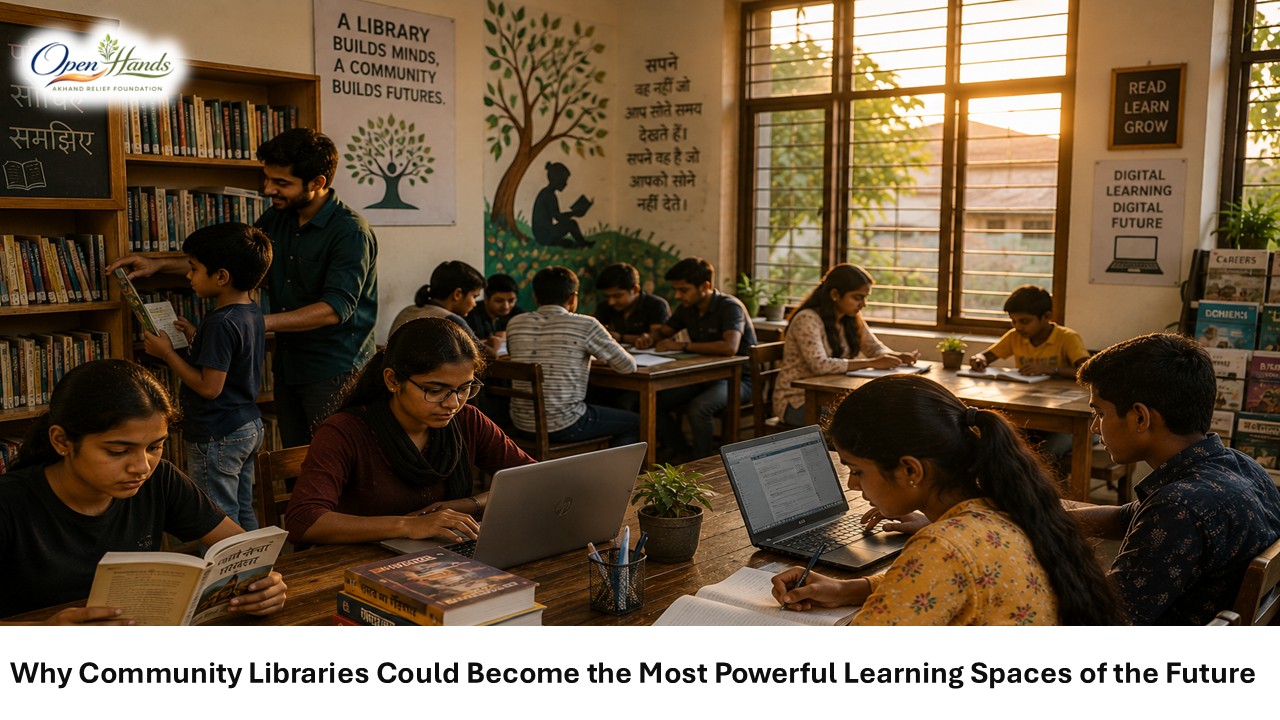
WHY COMMUNITY LIBRARIES COULD BECOME THE MOST POWERFUL LEARNING SPACES OF THE FUTURE
The future of learning may depend less on massive institutions and more on small, trusted spaces inside communities.
One of those spaces is the community library.
For decades, libraries were viewed mainly as quiet buildings filled with books. But in the modern world, their role is rapidly expanding. Today, community libraries can become:
- Digital learning hubs
- Safe study environments
- Skill development centers
- Internet access points
- Youth engagement spaces
- Community knowledge networks
As education becomes increasingly unequal and digitally fragmented, local libraries may quietly become some of the most important infrastructure for human development.
Learning Is Changing Faster Than Schools Can Adapt
Technology is transforming education rapidly.
Students now learn through:
- Online courses
- AI-assisted platforms
- Digital research tools
- Video-based learning
- Remote collaboration
But not every community has equal access to these systems.
Many students still struggle with:
- Poor internet connectivity
- Lack of study space
- Limited mentorship
- Digital distraction
- Absence of learning support at home
Community libraries can help bridge these gaps by creating stable, focused environments where learning becomes accessible and consistent.
Sometimes opportunity begins with something as simple as a quiet place to think.
Libraries Support Deep Learning in a Distracted World
Modern digital environments reward speed and constant stimulation.
Young people today are often surrounded by:
- Notifications
- Short-form videos
- Endless scrolling
- Information overload
- Rapid content consumption
As attention spans weaken, deep learning becomes harder.
Libraries create the opposite environment:
- Slower thinking
- Focused reading
- Reflection
- Curiosity
- Concentration
- Independent exploration
These are becoming increasingly valuable skills in the AI era.
The future may reward people who can think deeply, not just consume information quickly.
Libraries Are Becoming Digital Equalizers
One of the biggest inequalities today is not only educational access — it is digital capability.
Community libraries can help by offering:
- Public internet access
- Digital literacy programs
- Online learning support
- Research assistance
- Technology guidance
- AI awareness sessions
For many students, libraries may become the first place where they:
- Use a computer confidently
- Access online education
- Learn digital skills
- Discover career resources
- Explore opportunities beyond their immediate environment
This transforms libraries from passive institutions into active engines of mobility.
Safe Community Spaces Matter
Libraries also provide something many communities increasingly lack: safe public space.
Students often need environments where they can:
- Study without pressure
- Ask questions freely
- Build confidence
- Interact positively
- Feel supported
In underserved areas especially, libraries can become emotionally important spaces where young people feel valued and intellectually encouraged.
That sense of belonging matters deeply for long-term educational engagement.
Reading Culture Builds Long-Term Resilience
Communities with stronger reading cultures often develop:
- Better critical thinking
- Higher educational participation
- Stronger civic awareness
- Greater adaptability
- Improved communication skills
Reading does more than improve academic performance. It strengthens the ability to process ideas, evaluate information, and think independently.
As AI-generated content becomes more common, these human cognitive skills become even more important.
Libraries help protect and strengthen those capabilities.
Community Libraries Can Reduce Educational Inequality
Educational inequality is often reinforced outside classrooms.
Students from stable environments may already have:
- Internet access
- Quiet study rooms
- Books at home
- Guidance from educated family members
Others may not.
Community libraries help create shared learning infrastructure that reduces these differences.
Even small local libraries can create major long-term impact when they provide:
- Consistent access
- Trustworthy mentorship
- Learning continuity
- Educational encouragement
Opportunity becomes more realistic when support feels physically present inside the community.
Libraries as Community Innovation Centers
The libraries of the future may look very different from traditional models.
Modern community libraries can include:
- Reading spaces
- Digital labs
- Career workshops
- Community discussions
- Youth mentorship programs
- Creative learning activities
- Skill-building sessions
- Educational volunteering
Importantly, they can remain low-cost and highly accessible compared to many formal systems.
The most powerful learning spaces are often the most inclusive ones.
Grassroots Organizations Have a Critical Role
Community-driven organizations can help libraries evolve into dynamic social infrastructure.
They can support:
- Mobile libraries
- Rural reading programs
- Volunteer-led learning circles
- Local educational partnerships
- Digital literacy workshops
- Book donation systems
- Youth leadership initiatives
Sustainable education requires more than curriculum delivery. It requires environments that continuously encourage curiosity and growth.
Conclusion
In the coming decade, community libraries may become far more important than many people realize.
They are no longer simply places to store books. They are becoming safe learning ecosystems where education, digital access, mentorship, focus, and community connection come together.
As societies face growing educational inequality, digital overload, and rapid technological change, trusted local learning spaces may become essential foundations for resilience and opportunity.
Organizations like OpenHands Akhand Relief Foundation continue recognizing that long-term educational impact is built not only through access to information, but through community-centered environments that help individuals learn, think, and grow with dignity over time.