
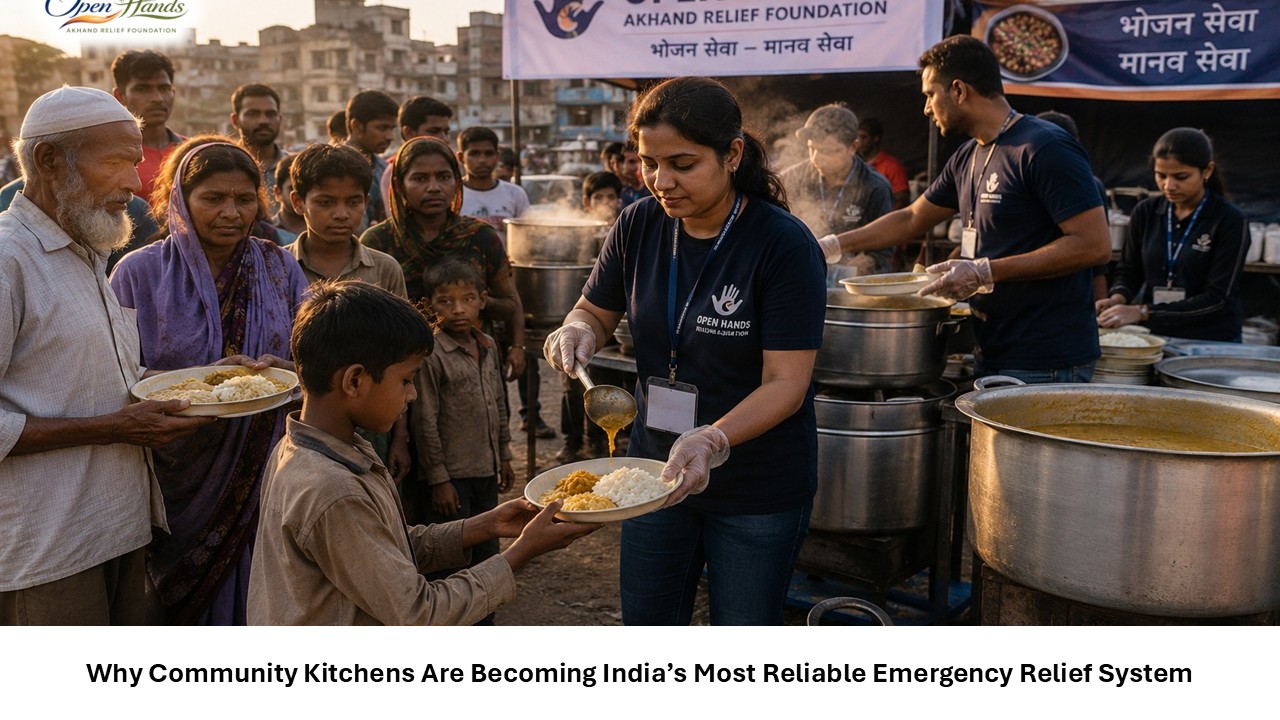
WHY COMMUNITY KITCHENS ARE BECOMING INDIA’S MOST RELIABLE EMERGENCY RELIEF SYSTEM
When disaster strikes, food becomes more than a necessity. It becomes stability, trust, and survival.
From floods and heatwaves to migration crises and urban poverty, India has repeatedly shown that one of the fastest and most effective forms of relief is a well-organized community kitchen. But the real shift happening today is not just about feeding people during emergencies. It is about building permanent grassroots systems that communities can rely on long before a crisis escalates.
Community kitchens are quietly becoming one of the most resilient social support models in the country.
The Problem With Traditional Relief Models
Emergency relief often arrives late, fragmented, or dependent on centralized logistics. Large-scale aid distribution faces predictable challenges:
- Transportation delays
- Resource mismanagement
- Lack of local coordination
- Temporary volunteer burnout
- Inconsistent food quality
- Limited reach in remote areas
In high-pressure situations, centralized systems struggle to move fast enough.
Local community kitchens solve this differently. They operate closer to the people who actually need support. Decisions happen faster. Distribution becomes more personal. Waste reduces. Accountability improves naturally because communities are directly involved.
That shift changes everything.
Why Community Kitchens Work
The strength of a community kitchen is not just the food. It is the system behind it.
A functioning local kitchen creates:
- A ready volunteer network
- Local sourcing partnerships
- Faster emergency activation
- Daily engagement with vulnerable families
- Community ownership instead of dependency
- Better identification of real needs
In many areas, kitchens that started during COVID-19 lockdowns evolved into permanent support systems for elderly citizens, daily wage workers, migrant families, and children facing food insecurity.
The most effective models are not built around charity alone. They are built around consistency.
The Power of Decentralized Relief
India’s scale makes decentralized aid essential.
A single centralized response cannot effectively support every locality during floods, heat emergencies, or sudden displacement. Smaller neighborhood-based kitchens create flexibility and speed that large systems often cannot match.
This decentralized approach offers several long-term advantages:
1. Faster Crisis Response
Local volunteers already understand the geography, families, and challenges of their area.
2. Lower Operational Costs
Community-led systems reduce transportation and storage overhead.
3. Better Transparency
When aid distribution happens within communities, misuse becomes easier to identify.
4. Sustainable Engagement
People are more likely to support initiatives they can directly see and participate in.
5. Stronger Social Trust
Shared participation strengthens relationships across neighborhoods, volunteers, donors, and beneficiaries.
Relief becomes collaborative instead of transactional.
Technology Is Quietly Improving Grassroots Relief
One of the biggest transformations in non-profit work is the integration of lightweight technology into local operations.
Simple systems now help organizations manage:
- Volunteer coordination
- Meal tracking
- Donation transparency
- Supply forecasting
- Emergency communication
- Real-time impact updates
Even basic digital workflows significantly improve consistency and accountability.
Artificial intelligence and automation are also beginning to support social organizations by helping optimize resource allocation, identify high-need areas, and streamline operational planning. The goal is not replacing human compassion. It is helping small teams scale their impact more effectively.
The Importance of Dignity in Food Relief
Food aid often focuses only on quantity. Sustainable community kitchens focus on dignity too.
That means:
- Clean serving environments
- Nutritious meals instead of survival-only food
- Respectful interactions
- Inclusive access
- Predictable availability
People remember how support made them feel, not just what was distributed.
This human-centered approach builds trust and encourages communities to participate actively rather than feeling dependent on aid systems.
Building Systems Instead of One-Time Campaigns
The future of social impact work will depend less on isolated charity drives and more on reliable systems that continue operating quietly every day.
Community kitchens demonstrate what scalable compassion actually looks like:
consistent, local, transparent, and community-driven.
The organizations creating lasting impact are the ones investing in infrastructure, volunteer ecosystems, operational discipline, and long-term trust rather than short-term visibility.
At OpenHands Akhand Relief Foundation, this belief remains central to every initiative: meaningful relief must be sustainable, organized, and capable of reaching people consistently when support is needed most.