
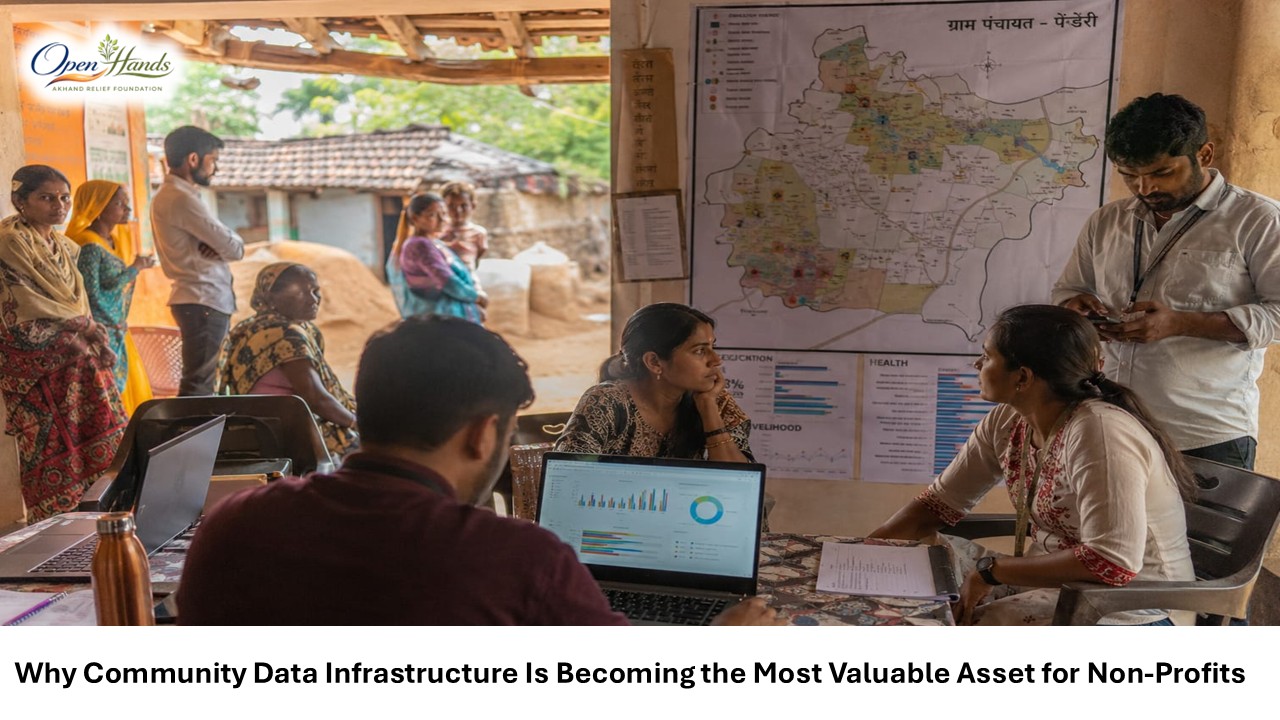
WHY COMMUNITY DATA INFRASTRUCTURE IS BECOMING THE MOST VALUABLE ASSET FOR NON-PROFITS
A food distribution drive can solve today's problem. A strong community data system can help prevent tomorrow's crisis.
As non-profits work to address increasingly complex social challenges, the ability to collect, organize, and use community-level information is becoming a strategic advantage. Community data infrastructure is no longer a luxury reserved for large organizations. It is rapidly becoming a foundation for effective and scalable social impact.
What Is Community Data Infrastructure?
Community data infrastructure refers to the systems, processes, and tools used to collect, manage, and analyze information about communities.
This can include:
- Household surveys
- Education and attendance records
- Health indicators
- Livelihood information
- Volunteer engagement data
- Resource distribution tracking
- Community feedback systems
The goal is not simply to store information. The goal is to make better decisions based on real conditions on the ground.
Why Traditional Aid Models Often Struggle
Many organizations still operate with fragmented information.
A family may receive support from multiple programs, yet there is no unified record of their needs or progress. Volunteers may collect valuable field insights that never become actionable data. Program evaluations may happen months after interventions, making it difficult to adapt quickly.
Without structured data systems, organizations often face:
- Duplication of efforts
- Resource inefficiencies
- Limited visibility into outcomes
- Challenges in reporting impact
- Difficulty scaling programs
Data Creates Better Community Outcomes
When organizations understand community patterns, they can move from reactive assistance to proactive intervention.
For example:
- Identifying neighborhoods with rising school dropout risks
- Detecting food insecurity trends before they become emergencies
- Mapping healthcare access gaps
- Tracking the effectiveness of livelihood programs over time
This allows resources to be allocated where they are needed most rather than where assumptions suggest they might be needed.
Transparency Starts With Good Information
Donors, partners, and communities increasingly expect measurable outcomes.
Strong data infrastructure helps organizations answer critical questions:
- How many people were reached?
- What changed after intervention?
- Which programs delivered the greatest impact?
- Where should future investments be directed?
Reliable reporting strengthens trust while helping organizations secure long-term support.
Technology Is Lowering the Barrier
The good news is that building community data systems no longer requires massive budgets.
Today, organizations can leverage:
- Mobile data collection platforms
- Cloud-based record management
- GIS mapping tools
- Volunteer reporting applications
- AI-assisted data analysis
- Automated dashboards
Even small non-profits can begin building meaningful data capabilities with limited resources.
The Human Side of Data
Data should never replace community relationships.
The strongest systems combine quantitative information with local knowledge, community feedback, and lived experiences. Technology can highlight patterns, but meaningful solutions still come from listening to people and understanding their realities.
When used responsibly, data strengthens human-centered decision-making rather than replacing it.
Building for the Next Decade
The future of social impact will depend on organizations that can learn, adapt, and improve continuously.
Community data infrastructure enables exactly that. It creates a foundation where every intervention generates insights, every insight improves decisions, and every decision contributes to stronger outcomes.
As the social sector evolves, organizations that invest in data-driven community systems will be better positioned to deliver sustainable change at scale. Initiatives led by organizations such as OpenHands Akhand Relief Foundation increasingly demonstrate that long-term impact is built not only through compassion, but through systems that help communities thrive consistently and sustainably.