THE MOST DANGEROUS HEALTH CRISIS IS THE ONE COMMUNITIES LEARN TO IGNORE
Most health crises do not arrive dramatically.
They grow quietly.
A persistent cough ignored for months.
Fatigue normalized as “hard work.”
Unsafe drinking water accepted as routine.
Mental exhaustion dismissed as weakness.
Malnutrition hidden behind full stomachs.
Heat stress treated as seasonal discomfort.
By the time these problems reach hospitals, communities are already carrying the damage.
This is one of the biggest failures in modern public health:
we respond late to conditions that were visible much earlier.
Healthcare Is Not the Same as Health Security
Many societies still treat healthcare as a reaction system.
Someone becomes seriously ill.
Treatment begins.
Resources are mobilized.
But real health security begins before emergencies develop.
It depends on whether communities consistently have:
- Safe water
- Nutritional stability
- Basic health awareness
- Preventive screening access
- Clean sanitation
- Reliable information
- Early intervention systems
- Mental health support
- Heat and pollution resilience
Without these foundations, hospitals become overload points rather than solutions.
The Silent Rise of Preventable Illness
Across vulnerable communities, many health challenges are technically preventable but operationally ignored.
This includes:
- Waterborne diseases
- Nutritional deficiencies
- Respiratory illness from pollution
- Untreated infections
- Maternal health complications
- Heat-related illnesses
- Stress-driven health deterioration
The danger is not only the illness itself.
It is normalization.
When communities experience the same preventable conditions repeatedly, suffering becomes routine instead of urgent.
That normalization delays action for years.
Why Preventive Health Systems Matter More Than Ever
Climate instability, urban crowding, migration, and economic stress are increasing pressure on already fragile healthcare systems.
This means future resilience will depend heavily on prevention.
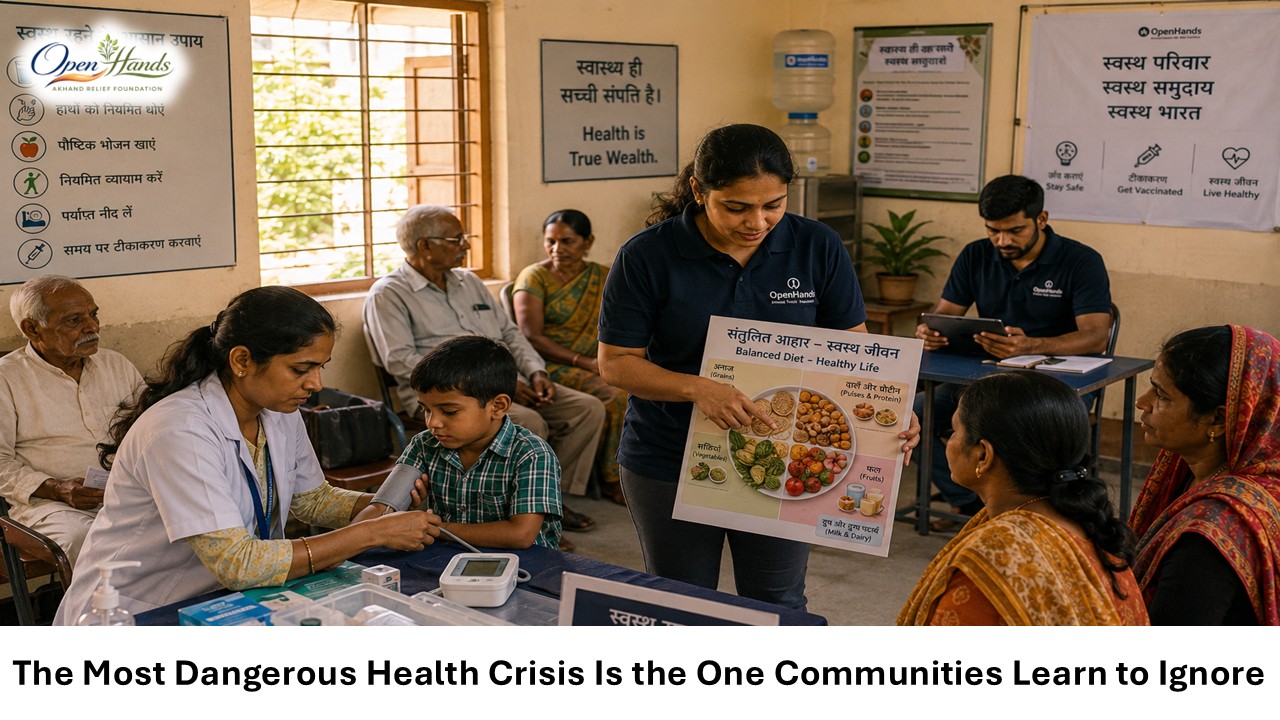
Preventive community health systems can dramatically reduce long-term crises through:
- Local awareness programs
- Early screenings
- Nutrition support
- Mobile health outreach
- Community sanitation systems
- Women-led health education
- Child wellness monitoring
- Heatwave preparedness
- Mental health conversations
Small interventions implemented consistently often prevent larger emergencies later.
Health Information Inequality Is a Serious Risk
Access to medical information remains deeply uneven.
Many families still rely on:
- misinformation,
- delayed treatment decisions,
- unsafe home remedies,
- or social stigma preventing healthcare access.
This is especially dangerous in areas involving:
- women’s health,
- mental health,
- adolescent health,
- sanitation,
- and chronic disease management.
The future of public health will depend not only on hospitals but also on whether communities can access understandable, trustworthy health knowledge early enough to act.
Mental Health Is No Longer a Secondary Issue
One of the fastest-growing invisible health burdens is psychological exhaustion.
Financial instability, academic pressure, caregiving stress, unemployment, digital overload, and social isolation are affecting mental well-being across all age groups.
Yet mental health support remains inaccessible for many communities.
People often continue functioning while silently experiencing:
- burnout,
- anxiety,
- emotional fatigue,
- or chronic stress.
The long-term effects eventually appear physically:
- sleep disorders,
- weakened immunity,
- cardiovascular strain,
- concentration loss,
- and emotional withdrawal.
Community health systems must begin treating mental wellness as foundational, not optional.
Women Are Often the Real Health Infrastructure
In many communities, women quietly carry the responsibility for:
- nutrition management,
- caregiving,
- hygiene practices,
- medicine tracking,
- child wellness,
- elderly support,
- and health education.
Yet women themselves frequently receive delayed healthcare access.
Strengthening community health therefore requires investing in:
- maternal care,
- menstrual health awareness,
- nutrition education,
- women-led health leadership,
- and safe healthcare accessibility.
When women gain stable health support systems, entire communities become more resilient.
Technology Can Improve Access — If It Stays Human-Centered
Digital health tools are becoming increasingly important:
- telemedicine,
- mobile diagnostics,
- AI-assisted screening,
- health tracking systems,
- and remote consultations.
But technology succeeds only when communities trust and understand it.
The strongest health systems will combine:
- local outreach,
- human relationships,
- grassroots trust,
- and practical technology.
People follow systems they feel connected to.
The Future of Healthcare May Be Hyperlocal
Large hospitals remain essential.
But future resilience may depend equally on localized health ecosystems.
Communities need nearby systems capable of:
- identifying risks early,
- sharing reliable information,
- supporting vulnerable families,
- and reducing preventable escalation.
That requires:
- trained volunteers,
- local health workers,
- awareness programs,
- mobile support networks,
- and long-term consistency.
Health resilience is built through repetition, trust, and accessibility — not only emergency response.
Healthy Communities Create Stronger Societies
Health affects every other development outcome:
- education,
- employment,
- productivity,
- family stability,
- economic resilience,
- and social participation.
A child struggling with untreated illness learns differently.
A worker facing chronic fatigue earns differently.
A mother without healthcare access supports her family under constant risk.
Public health is not a separate issue from development.
It is the foundation beneath it.
The strongest societies are not simply the ones with advanced medical systems. They are the ones where communities can identify risks early, access support consistently, and maintain dignity while seeking care.
OpenHands Akhand Relief Foundation continues to support people-centered approaches to health awareness, preventive care, nutrition support, community resilience, and grassroots systems that prioritize long-term well-being over temporary intervention alone.