
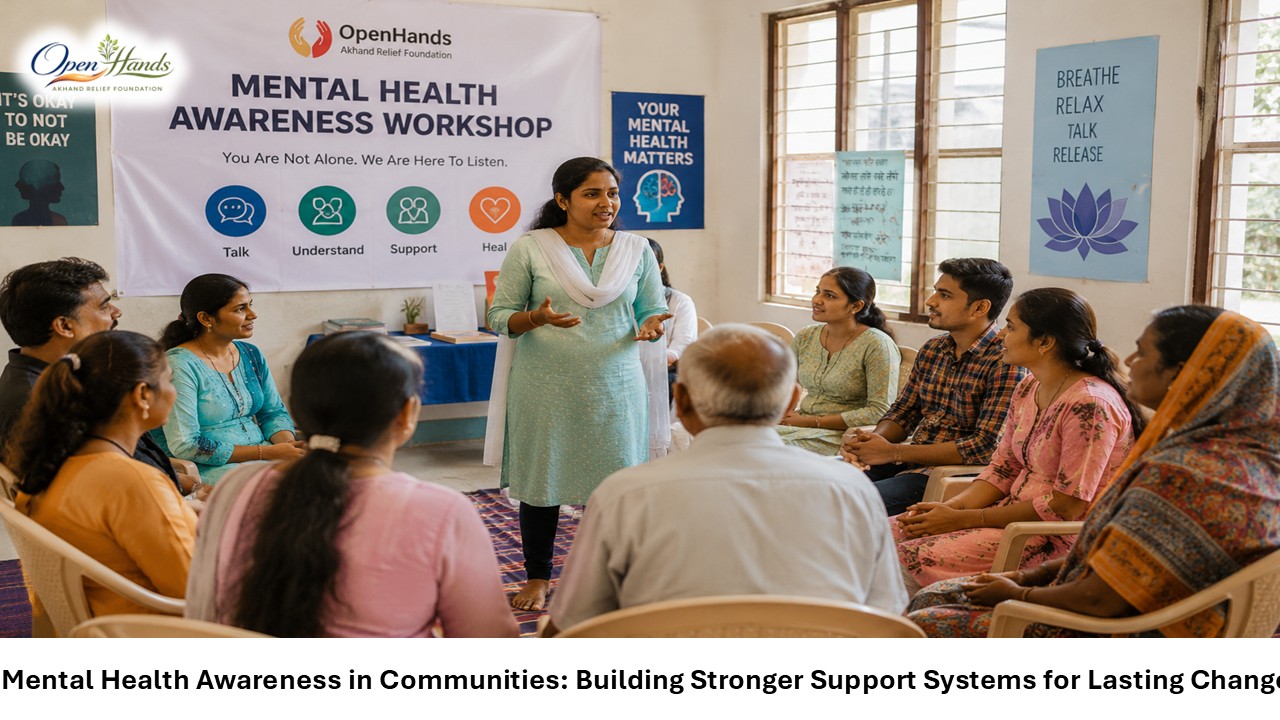
MENTAL HEALTH AWARENESS IN COMMUNITIES: BUILDING STRONGER SUPPORT SYSTEMS FOR LASTING CHANGE
A healthy community is not defined only by physical health. It is also shaped by the emotional and mental well-being of its people.
As modern life becomes increasingly demanding, mental health challenges are affecting individuals across all age groups. Anxiety, stress, depression, social isolation, and emotional burnout are becoming more common, yet access to mental health support remains limited for many communities.
Addressing mental health is no longer optional. It is essential for sustainable social development.
Why Mental Health Matters
Mental health influences how people think, feel, work, learn, and interact with others. When individuals struggle with mental health challenges without support, the effects ripple across families, schools, workplaces, and entire communities.
Good mental health contributes to:
- Better physical health outcomes
- Improved educational performance
- Stronger family relationships
- Increased workplace productivity
- Greater community participation
- Reduced social and economic burdens
Communities that prioritize mental well-being create environments where people can reach their full potential.
The Hidden Challenge of Mental Health Stigma
One of the biggest barriers to mental healthcare is stigma.
Many individuals avoid seeking help because they fear judgment, misunderstanding, or social exclusion. This often leads to delayed intervention and worsening conditions.
Breaking stigma requires:
- Open conversations about mental health
- Community awareness programs
- School-based mental health education
- Workplace wellness initiatives
- Accessible counseling and support services
When mental health becomes part of everyday discussion, seeking help becomes a sign of strength rather than weakness.
Building Community-Based Support Systems
Effective mental health support extends beyond hospitals and clinics.
Communities can create meaningful impact through local support networks that encourage connection, understanding, and early intervention.
Examples include:
- Community counseling centers
- Peer support groups
- Youth mentorship programs
- Mental health awareness workshops
- School counseling services
- Family support initiatives
- Volunteer-led outreach programs
These systems help identify challenges early while creating safe spaces where individuals feel supported.
Mental Health and Youth Development
Young people face unique pressures related to education, career expectations, social media, and changing social environments.
Without adequate support, these pressures can affect confidence, learning outcomes, and future opportunities.
Investing in youth mental health can:
- Improve academic performance
- Reduce dropout rates
- Strengthen emotional resilience
- Encourage healthy decision-making
- Build future community leaders
Supporting young minds today strengthens communities for generations to come.
The Role of Technology in Mental Health Access
Technology is helping bridge mental health service gaps, especially in underserved areas.
Teletherapy platforms, mental wellness applications, AI-assisted support tools, and digital awareness campaigns are expanding access to mental health resources.
Benefits include:
- Greater accessibility
- Reduced stigma through private support
- Faster access to guidance
- Continuous monitoring and follow-up
- Wider reach for awareness programs
Technology cannot replace human connection, but it can significantly enhance support systems when used responsibly.
Creating a Culture of Well-Being
Mental health should not be addressed only during crises.
Sustainable mental wellness requires ongoing community engagement and proactive care. Encouraging healthy lifestyles, social connections, emotional awareness, and supportive environments helps prevent many challenges before they escalate.
Simple actions such as active listening, community engagement, stress management education, and supportive relationships can make a significant difference.
Looking Ahead
Strong communities are built on more than infrastructure and economic growth. They are built on people who feel supported, valued, and emotionally healthy.
Creating sustainable mental health systems requires awareness, education, accessibility, and collective responsibility. When communities invest in mental well-being, they invest in resilience, productivity, and long-term social progress.
At OpenHands Akhand Relief Foundation, we recognize that lasting impact comes from strengthening both physical and mental well-being. Building compassionate support systems today helps create healthier, stronger communities for the future.