
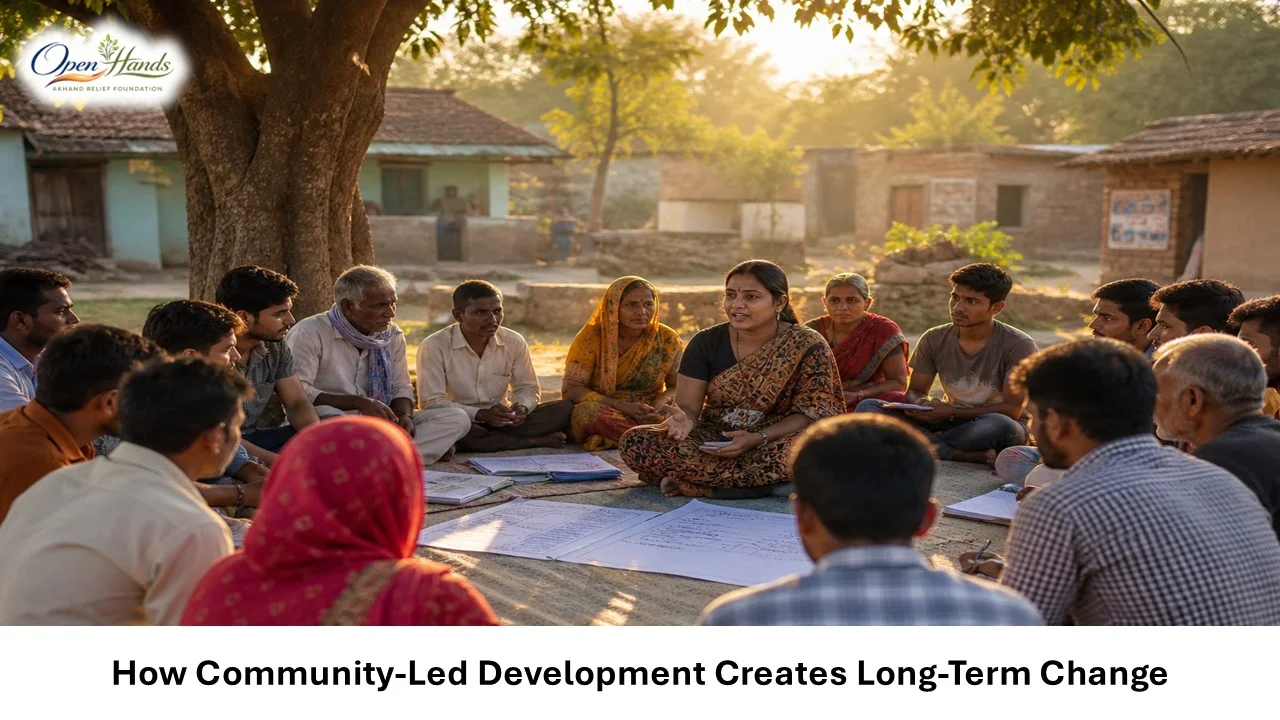
HOW COMMUNITY-LED DEVELOPMENT CREATES LONG-TERM CHANGE
What Is Community-Led Development?
Community-led development is a model where local communities actively participate in identifying problems, designing solutions, and managing implementation.
It’s not just inclusion—it’s ownership.
This approach recognizes a simple truth: people understand their own challenges better than any external system ever can.
Why Traditional Models Fall Short
Many top-down interventions struggle because they:
- Miss local context and cultural realities
- Create dependency rather than independence
- Deliver temporary fixes instead of lasting systems
- Lack accountability at the grassroots level
The result? Impact that fades once funding or attention disappears.
What Makes Community-Led Development Different
The difference lies in control and continuity.
When communities lead, three critical shifts happen:
1. Solutions Become Context-Specific
Local involvement ensures interventions are relevant, practical, and adaptable to real conditions on the ground.
2. Ownership Drives Sustainability
When people build something themselves, they are far more invested in maintaining and improving it.
3. Leadership Emerges from Within
Community-led systems naturally develop local leaders who continue driving progress long after initial support ends.
How It Creates Long-Term Change
Sustainable impact is not built on isolated efforts—it’s built on systems.
Community-led development strengthens these systems by:
- Building Local Capacity
Skills, knowledge, and decision-making abilities stay within the community. - Reducing External Dependency
Communities become less reliant on continuous outside aid. - Encouraging Collective Responsibility
Solutions are maintained not by individuals, but by shared commitment. - Creating Scalable Models
Proven community-driven frameworks can be replicated across regions with minimal friction.
Real Impact: From Relief to Resilience
Consider the difference:
- A one-time food distribution solves hunger for a day
- A community-run food system addresses it for years
The first is relief. The second is resilience.
This is where most NGOs struggle—moving beyond immediate response to building long-term stability.
Key Principles That Make It Work
Effective community-led development is not accidental. It depends on:
- Active participation, not passive beneficiaries
- Transparency in decisions and resource use
- Continuous engagement, not one-time intervention
- Trust built through consistency, not promises
Without these, even well-designed programs lose momentum.
The Role of Organizations Like OpenHands
The role of a nonprofit is not to control the system—but to enable it.
At OpenHands Akhand Relief Foundation, the focus is on:
- Supporting local leadership
- Designing systems that communities can manage independently
- Ensuring resources are used transparently and effectively
- Building models that scale without losing human connection
The goal is simple: create impact that continues even in our absence.
Why This Matters Now More Than Ever
In a rapidly changing world, sustainable development cannot rely on external intervention alone.
Communities must become active participants in their own growth.
Because real change doesn’t come from delivering help—it comes from building systems that no longer need it.
Closing Thought
Community-led development is not the easiest path. It takes more time, more trust, and more effort.
But it’s the only approach that ensures impact doesn’t disappear when the program ends.
And that’s the difference between helping people today and changing their tomorrow.