
BUILDING SCALABLE FOOD DONATION SYSTEMS THAT REDUCE HUNGER SUSTAINABLY
Every day, tons of edible food are wasted while millions struggle to access regular meals. The problem is not only food scarcity. It is the absence of efficient systems that move surplus food to people who need it most.
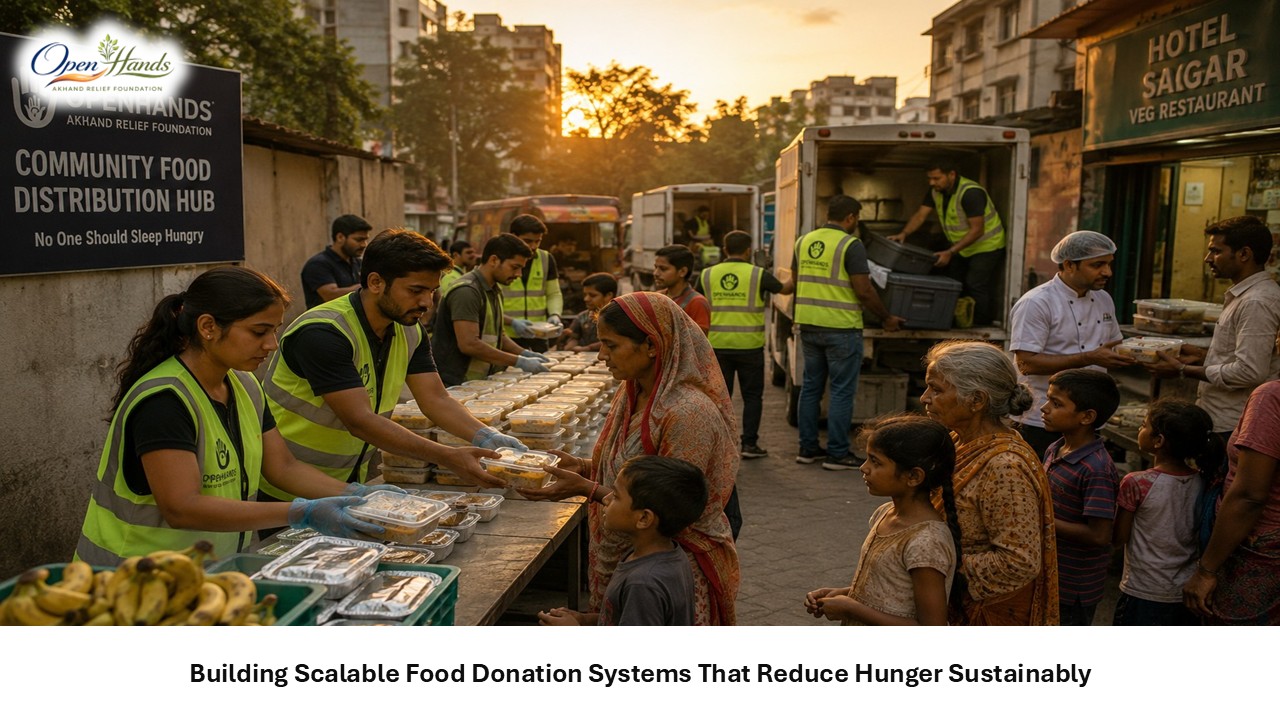
Scalable food donation systems are changing that reality. Instead of relying on occasional charity drives, these systems build consistent, organized, and measurable networks that reduce waste and improve food access at scale.
Why Traditional Food Donation Models Fall Short
Many food donation efforts begin with good intentions but struggle to sustain impact over time. Common challenges include:
- Irregular food supply
- Poor coordination between donors and volunteers
- Lack of transportation and storage
- Food safety concerns
- No tracking or accountability system
- Dependency on one-time campaigns
Without structure, even large donation efforts lose efficiency. Communities need systems that can operate consistently regardless of season, funding cycles, or volunteer fluctuations.
What Makes a Food Donation System Scalable
A scalable system is designed to grow without losing efficiency. It works across neighborhoods, cities, and eventually regions while maintaining reliability.
Key components include:
1. Decentralized Collection Networks
Local collection points make food recovery faster and more practical. Restaurants, wedding halls, grocery stores, housing societies, and households can contribute surplus food through nearby hubs instead of depending on a single central unit.
This reduces transportation delays and prevents food spoilage.
2. Technology-Driven Coordination
Technology improves response time and operational clarity.
Simple digital systems can help:
- Match food donors with nearby distribution teams
- Track surplus availability in real time
- Maintain volunteer schedules
- Monitor delivery routes
- Generate transparency reports
Even lightweight automation tools can significantly improve consistency and reduce operational waste.
The Importance of Food Safety
Scalability without safety creates risk.
Strong food donation systems establish:
- Standard packaging procedures
- Time-sensitive pickup protocols
- Basic hygiene training for volunteers
- Temperature-sensitive storage practices
- Clear food quality checks before redistribution
Trust grows when recipients know the food is safe, fresh, and handled responsibly.
Community Participation Creates Long-Term Stability
The most effective food donation systems are community-owned, not organization-dependent.
When local residents, students, businesses, and volunteers participate regularly, the network becomes more resilient. Small recurring contributions from many people often create more sustainable impact than occasional large donations.
Community-led systems also improve:
- Faster identification of local hunger zones
- Better cultural understanding of food needs
- Reduced operational costs
- Stronger accountability
Data Helps Expand Impact
Scalable aid systems rely on measurable outcomes.
Tracking data such as:
- Meals distributed
- Food waste reduced
- Active donor participation
- Delivery efficiency
- High-need regions
helps organizations improve operations and attract long-term support from donors and partners.
Transparency is not just about reporting numbers. It builds credibility and encourages sustained participation.
Building Systems Instead of Events
One-time food drives create temporary relief. Systems create continuity.
The future of food aid depends on:
- Consistent collection channels
- Local partnerships
- Volunteer infrastructure
- Smart logistics
- Transparent operations
- Sustainable funding models
When these elements work together, food donation becomes more than charity. It becomes a dependable social support mechanism capable of serving communities every single day.
Organizations like OpenHands Akhand Relief Foundation continue to explore community-centered approaches that combine local participation, operational discipline, and scalable coordination to improve food accessibility in a sustainable way.
Ending hunger requires more than generosity. It requires systems designed to last.